
Regresión lineal de los componentes de diseño de mezcla de concreto para resistencias entre 250 y 280 kg/cm² al aplicar el Método ACI y Método Porrero
DOI:
https://doi.org/10.51372/gacetatecnica272.3Palabras clave:
regresión lineal, Método ACI, Método de Porrero, diseño mezcla concretoResumen
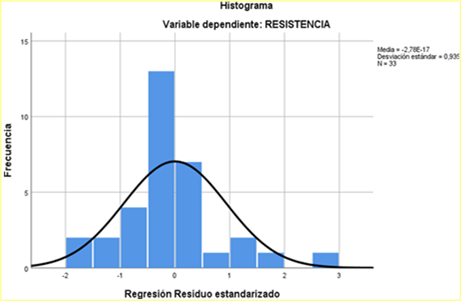
El presente trabajo de investigación es un estudio de tipo exploratorio correlacional que tiene como finalidad determinar la regresión lineal de los componentes de diseños de mezclas de concreto, en trabajos de grado realizados en la carrera de ingeniería civil de la Universidad Centroccidental Lisandro Alvarado, Barquisimeto, Venezuela; que emplearon el Método ACI y el Método de Porrero para resistencias a la compresión entre 24,517 y 27,459 MPa (250 y 280 kg/cm2) con tamaño máximo nominal de 1 pulgada, asentamientos hasta 6 pulgadas, cemento Portland tipo I o tipo CPCA1 y arena natural. Se revisaron 276 trabajos de grado de las cuales 74 cumplieron con el alcance establecido. El análisis estadístico descriptivo mostró dispersiones bajas e intermedias con tendencia hacia la baja, de tal forma se concluyó que las regresiones de ambos Métodos son lineales. El modelo del Método ACI posee un poder de explicación del 84,8% y el Método Porrero del 55,1%, sin embargo, ambos modelos no cumplieron con el supuesto de normalidad
Descargas
Referencias
ACI, “Requisitos de Reglamento para Concreto Estructural (ACI 318S-14) y Comentario (ACI 318SR-14)” American Concrete Institute, EUA, 2015
J. Porrero, C. Ramos, J. Graces y G. Velazco, “Manual del Concreto Estructural”, Caracas, Venezuela, 2014
F. Peña, “Determinación de la distribución de probabilidades de los componentes de diseños de mezclas de concreto para resistencias entre 250 – 280 kg/cm²”, Trabajo de Grado, Decanato de Ingeniería Civil, Universidad Centroccidental Lisandro Alvarado, Barquisimeto, Venezuela, 2018
Descargas
Publicado
Número
Sección
Licencia
Derechos de autor 2026 Copyright will be assigned automatically to José Antonio Martínez González, Mariana Suárez Pereira when this is published.

Esta obra está bajo una licencia internacional Creative Commons Atribución-NoComercial-CompartirIgual 4.0.
Las opiniones expresadas por los autores no necesariamente reflejan la postura del editor de la publicación ni de la UCLA. Se autoriza la reproducción total o parcial de los textos aquí publicados, siempre y cuando se cite la fuente completa y la dirección electrónica de esta revista. Los autores(as) tienen el derecho de utilizar sus artículos para cualquier propósito siempre y cuando se realice sin fines de lucro. Los autores(as) pueden publicar en internet o cualquier otro medio la versión final aprobada de su trabajo.


.png)