
Fraguado del concreto en juntas frías y su incidencia en la resistencia a flexión de vigas estructurales
DOI:
https://doi.org/10.51372/gacetatecnica272.5Palabras clave:
fraguado del concreto, resistencia estructural, resistencia a flexiónResumen
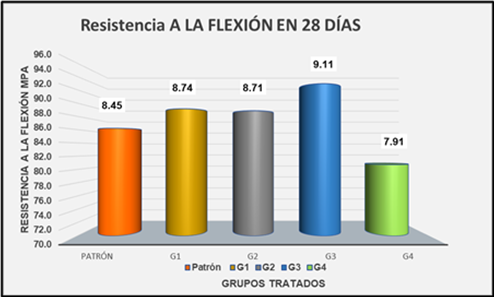
El estudio examina el impacto del tiempo de fraguado del concreto en juntas frías sobre la resistencia a flexión de vigas estructurales. Metodología aplicada, con método científico hipotético-deductivo, mediante un enfoque explicativo y correlacional. Se empleó un diseño cuasiexperimental en vigas de concreto distribuidas en un grupo control y cuatro grupos experimentales haciendo un total de 45 muestras, bajo un diseño factorial 22. Los resultados revelaron que interrupciones controladas de hasta 30 minutos durante el fraguado mejoran significativamente la resistencia estructural, mientras que tiempos prolongados de 60 minutos deterioran la unión y reducen la resistencia. Además, el tipo de junta y la duración de la interrupción fueron factores determinantes en el comportamiento del concreto. Estos hallazgos resaltan la necesidad de controlar rigurosamente los tiempos y tipos de juntas en la construcción para optimizar la durabilidad y seguridad de las estructuras, aportando criterios técnicos valiosos para la ingeniería civil sostenible
Descargas
Referencias
PNUD, “¿Qué son los Objetivos de Desarrollo Sostenible?” Disponible en: https://www.undp.org/es/sustainable-development-goals, 2016
B. Zega et al., “Effects of cold joint and its direction on the compressive and flexural strength of concrete” Geomate Journal, vol. 20, no. 82, Disponible en: https://doi.org/10.21660/2021.82.J2086, 2021
P. Banstola et al., “An experimental study on strength of concrete due to cold joints” Journal of Advanced Research in Geo Sciences & Remote Sensing, vol. 8, no. 3–4, Disponible en: https://doi.org/10.24321/2455.3190.202104, 2022
Z. Feng, C. Li, L. Ke y D. Yoo, “Tensile behavior of ultra-high-performance fiber-reinforced concrete (UHPFRC) structure with cold joints” Engineering Structures, vol. 273, Disponible en: https://doi.org/10.1016/j.engstruct.2022.115084, 2022
T. Looney et al., “Concrete Bond and Behavior of Nonproprietary Ultrahigh-Performance Concrete Bridge Slab Joints” Journal of Bridge Engineering, vol. 26, no. 2, Disponible en: https://doi.org/10.1061/(ASCE)BE.1943-5592.0001669, 2021
A. Semendary, A. Kriegl y D. Svecova, “Experimental study on bond performance at UHPC-UHPC cold joints” Construction and Building Materials, vol. 344, Disponible en: https://doi.org/10.1016/j.conbuildmat.2022.128237, 2022
R. Ccohuanqui y R. Tupa, “Análisis del comportamiento mecánico de juntas frías rugosas en la resistencia a la compresión f’c=210 kg/cm², con cemento tipo IP en la ciudad de Cusco, 2022”, Tesis de Ing. Civil, Cusco, Perú, Disponible en: http://hdl.handle.net/20.500.12918/8155, 2023
A. García y L. La Madrid, “Uso de Sikadur32 sobre juntas frías para evaluar incidencia en la resistencia a la compresión del concreto f’c 210 kg/cm², Bagua Grande” Tesis de Ing. Civil, Univ. César Vallejo (UCV), Bagua Grande, Perú, Disponible en: https://hdl.handle.net/20.500.12692/96355, 2022
B. Minchán, “Influencia del epóxico adherente Sikadur 32 y lechada de cemento en la resistencia a compresión del concreto f’c = 210 kg/cm², en juntas de construcción usuales” Tesis de Ing. Civil, Univ. Nacional de Cajamarca (UNC), Cajamarca, Perú, Disponible en: http://hdl.handle.net/20.500.14074/6870, 2024
J. Abarca y S. Pinedo, “Influencia de juntas frías con diferentes tiempos de formación en la resistencia a compresión y tracción del concreto f’c = 210 kg/cm², Cusco,” Tesis de Ing. Civil, Univ. César Vallejo (UCV), Perú, Disponible en: https://hdl.handle.net/20.500.12692/58607, 2021
A. Contreras, “Determinación de los tiempos de corte para juntas de construcción en pavimentos rígidos, Trujillo”, Tesis de Ing. Civil, Trujillo, Perú, Disponible en: https://hdl.handle.net/11537/31347, 2022
G. López y A. Becerril, “Evaluación de la influencia del aditivo Epóxine 200 en la resistencia a la compresión del concreto f’c = 280 kg/cm² en el manejo de juntas frías, durante la construcción de la Sede Central del Gobierno Regional de Ucayali” Tesis de Ing. Civil, Pucallpa, Perú, Disponible en: https://hdl.handle.net/20.500.14621/6895, 2024
Y. Yoon, K. Yang y S. Kwon, “Service life of GGBFS concrete under carbonation through probabilistic method considering cold joint and tensile stress” Journal of Building Engineering, vol. 32, Disponible en: https://doi.org/10.1016/j.jobe.2020.101826, 2020
M. Shishesaz y M. Hosseini, “Effects of joint geometry and material on stress distribution, strength and failure of bonded composite joints: an overview”, The Journal of Adhesion, vol. 96, no. 12, Disponible en: https://doi.org/10.1080/00218464.2018.1554483, 2020
A. Torres et al., “Comportamiento mecánico de juntas frías lisas de concreto” Revista Ingeniería de Construcción, vol. 31, no. 3, Disponible en: http://dx.doi.org/10.4067/S0718-50732016000300001, 2016
A. Kodsy y G. Morcous, “Flexural strength prediction models of non-prestressed Ultra-High-Performance Concrete (UHPC) components” Engineering Structures, vol. 34, Disponible en: https://doi.org/10.1016/j.istruc.2021.10.047, 2021
Q. Sun y C. Liu, “Experimental study and calculation method on the flexural resistance of reinforced concrete beam strengthened using high strain‐hardening ultra-high-performance concrete” Structural Concrete, vol. 22, no. 3, Disponible en: https://doi.org/10.1002/suco.202000592, 2021
J. Arias et al., “Mechanical stabilization of aeolian sand with ceramic brick waste aggregates,” Construction and Building Materials, vol. 363, Disponible en: https://doi.org/10.1016/j.conbuildmat.2022.129846, 2023
R. Mohammed et al., “Characterizing geotechnical properties of sand subgrade soils stabilized with geopolymer,” Case Studies in Construction Materials, 2025
Descargas
Publicado
Número
Sección
Licencia
Derechos de autor 2026 Ruth Felicita Villar Paucar, Luis Villar Requis Carbajal, Yalin Manchay Rivera

Esta obra está bajo una licencia internacional Creative Commons Atribución-NoComercial-CompartirIgual 4.0.
Las opiniones expresadas por los autores no necesariamente reflejan la postura del editor de la publicación ni de la UCLA. Se autoriza la reproducción total o parcial de los textos aquí publicados, siempre y cuando se cite la fuente completa y la dirección electrónica de esta revista. Los autores(as) tienen el derecho de utilizar sus artículos para cualquier propósito siempre y cuando se realice sin fines de lucro. Los autores(as) pueden publicar en internet o cualquier otro medio la versión final aprobada de su trabajo.


.png)